
Vinyl Liner Pool Maintenance
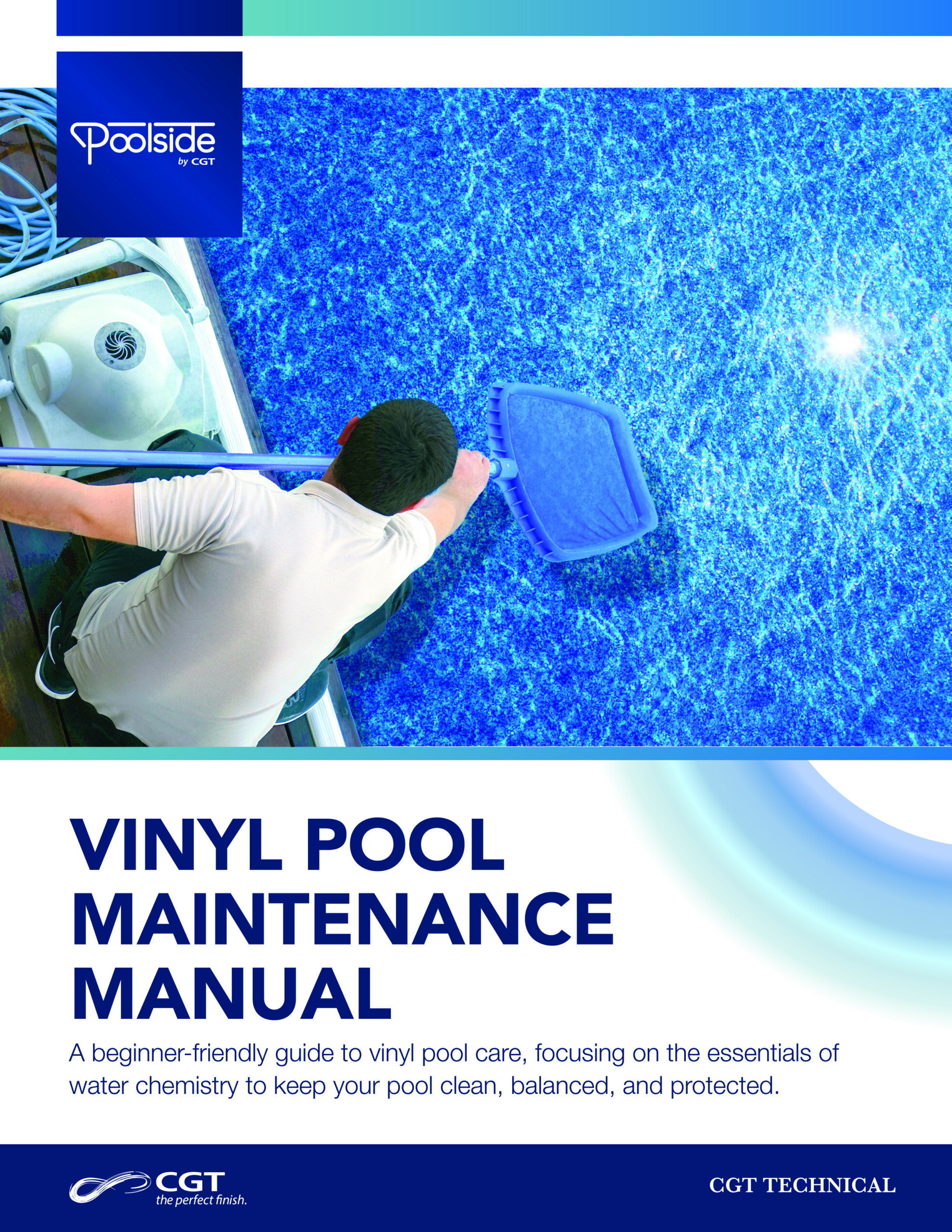
Vinyl Pool Maintenance Manual
A beginner-friendly guide to vinyl pool care, focusing on the essentials of water chemistry to keep your pool clean, balanced, and protected.
With proper care and maintenance, the watertightness, smooth finish, and striking print of your liner will endure the elements and provide countless hours of lounging, entertaining, and fitness. Contained in this manual are some tips to ensure you get the most out of your pool liner.
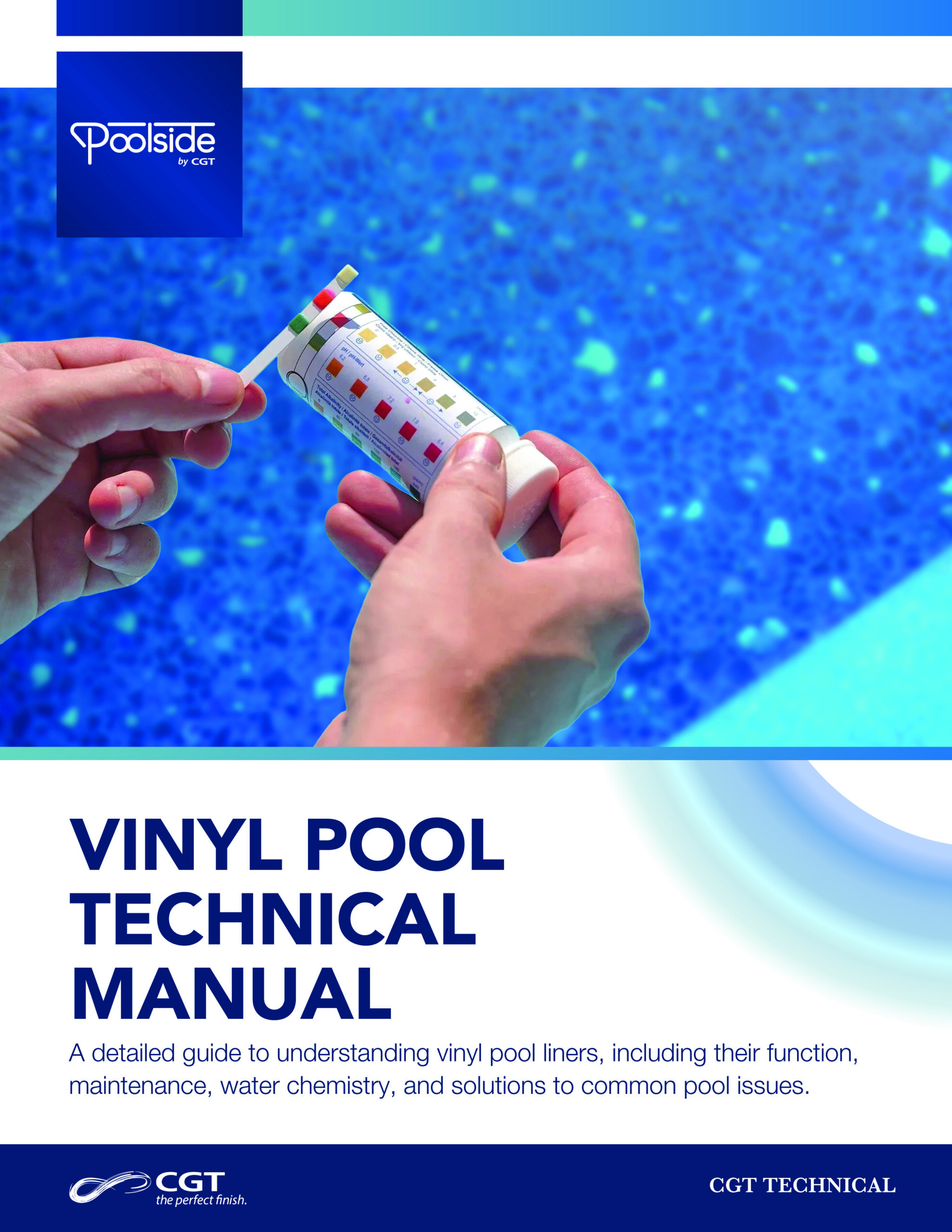
Vinyl Pool Technical Manual
A detailed guide to understanding viny! pool liners, including their function, maintenance, water chemistry, and solutions to common pool issues.
Vinyl pool liners are one of the most common finishes for inground swimming pools because they provide a smooth surface, customizable designs, and a durable watertight interior.
This Vinyl Pool Liner Technical Guide, based on the Poolside by CGT technical manual, explains how vinyl liners work, how to maintain them, and how to address common pool issues.
Each section covers key topics such as pool water chemistry, cleaning practices, stains, algae, pool equipment, and water balance. You can explore each section online below or download the full technical manual.
Vinyl Pool Liners: Benefits, Technology, and Pool Liner Specifications
What Is the Ideal Pool Water Chemistry for Vinyl Pool Liners?
Swimming Pool Sanitizers: Chlorine, Bromine, and Biguanide
Pool Stabilizer, Saltwater Pools, and Algaecides
Why Is My Pool Water Cloudy? Clarifiers, Flocculants, and Enzymes Explained
How Do You Clean and Maintain a Vinyl Pool Liner Safely?
What Temperature Is Too Hot for a Vinyl Pool Liner?
Vinyl Pool Liner Storage and Handling Before Installation
Common Vinyl Pool Liner Problems: Wrinkles, Fading, and Staining
What Causes Stains or Algae on Vinyl Pool Liners?
Pool Equipment for Vinyl Liner Pools: Salt Systems, Covers, and Cleaners
In-House Testing & CFFA Certification
Long history of testing since 1940s

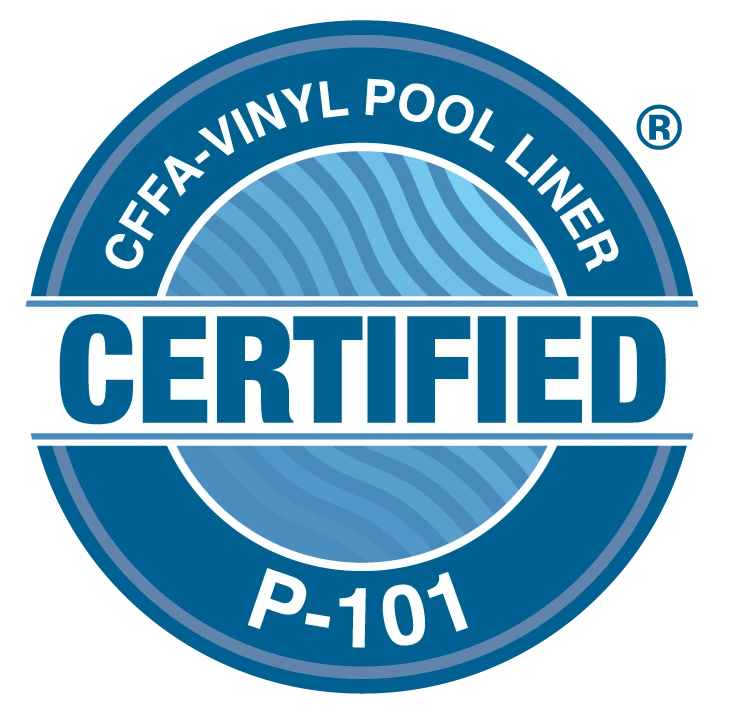
We proudly follow the CFFA Recommended Minimum Performance Standard for In-Ground Swimming Pool Liners, CFFA-P-101. There are 17 different tests that quality vinyl must pass, and you can be confident that liners made with Poolside by CGT vinyl will meet the demands of today's customers.
- Material Strength and Duribility Test
- Tear Resistance (CFFA 26A) Test
- Aesthetic Appeal Test
- UV Perfomance Test
- Temperature Resistance Test
- Density Test
Common Pool Maintenance Questions & Terminology
How do you maintain a vinyl pool liner properly?
Proper vinyl pool liner maintenance focuses on keeping pool water chemistry balanced and cleaning the liner regularly.
Key maintenance tasks include:
- Testing pool water chemistry regularly
- Monitoring sanitizer levels
- Maintaining correct chlorine, pH, and alkalinity levels
- Cleaning the liner with non-abrasive tools
- Monitoring stabilizer and calcium hardness levels
- Maintaining proper circulation and filtration
Balanced water chemistry helps protect the liner from fading, wrinkling, and damage.
Learn more about recommended vinyl pool water chemistry levels in our guide:
What pool chemicals should I test regularly?
Several important chemicals must be monitored to keep your swimming pool water balanced and safe.
Pool owners should regularly test:
- Total alkalinity
- Calcium hardness
- pH level
- Stabilizer (cyanuric acid)
- Free chlorine
- Total dissolved solids (TDS)
Each of these factors affects water balance, sanitizer efficiency, and pool liner protection.
See the full breakdown of ideal pool chemical levels here:
What is the correct order to adjust pool chemicals?
When balancing pool water chemistry, it’s important to adjust chemicals in the correct order to prevent unwanted reactions.
The typical adjustment order is:
- Total Alkalinity
- Calcium Hardness
- pH
- Stabilizer (CYA)
- Free Chlorine
Maintaining this order helps stabilize the pool water and prevents chemical imbalances.
Learn why pool alkalinity should be adjusted first:
Why is balanced pool water chemistry important for vinyl pool liners?
Balanced pool water chemistry for vinyl liners helps prevent damage and keeps the liner looking new.
Poor water balance can cause:
- Liner fading or discoloration
- Wrinkling or stiffness
- Algae growth
- Scaling or cloudy water
Keeping water chemistry within recommended ranges helps extend the lifespan of your vinyl liner.
Learn how pool pH levels affect vinyl liners:
How often should you test pool water chemistry?
Most pool professionals recommend testing pool water chemistry several times per week during the swimming season.
Typical testing schedule:
- pH and chlorine: 2–3 times per week
- Total alkalinity: once per week
- Stabilizer and calcium hardness: every few weeks
- TDS: monthly
Regular testing helps prevent water chemistry problems before they affect the pool liner.
Learn more about how chlorine levels affect pool sanitation:
What factors can affect pool water chemistry?
Several environmental and usage factors can influence pool water chemistry balance.
Common factors include:
- Sun exposure
- Pool temperature
- Number of swimmers (bather load)
- Source water quality
- Pool covers
- Surrounding environment like trees or landscaping
Because every pool is different, water chemistry may require adjustments depending on these factors.
How should pool chemicals be added safely?
Adding chemicals properly is important for maintaining safe pool water chemistry and protecting the pool liner.
A common rule used by pool professionals is:
Calculate → Dissolve → Circulate
This means measuring the correct amount, dissolving chemicals in water first, and ensuring the pool pump is circulating water during and after chemical additions.
Learn the full safe pool chemical adding process:
How do you close and protect a vinyl pool for winter?
Closing a pool properly helps protect the vinyl pool liner during winter months.
Important steps include:
- Balancing pool water chemistry
- Lowering the water level to the recommended height
- Cleaning and vacuuming the pool
- Circulating water before shutdown
- Installing a properly fitted winter pool cover
Proper winterization helps prevent liner damage and chemical imbalances.
See the full guide to covering and closing a pool:
What is the best way to clean a vinyl pool liner?
Cleaning a vinyl pool liner safely requires non-abrasive tools and appropriate cleaners.
Recommended cleaning practices include:
- Using soft brushes or microfiber cloths
- Avoiding harsh chemicals or solvents
- Regularly brushing and vacuuming the pool
- Cleaning the waterline to prevent buildup
Proper cleaning helps maintain the liner’s appearance and prevents long-term staining.
Learn more about safe vinyl pool liner cleaning methods: